The Definitive Guide to
Union Square Office Lofts.
A field guide to the buildings around the park — the cast-iron store floors, the garment and printing lofts behind them, and how to tell which one you are actually being shown.
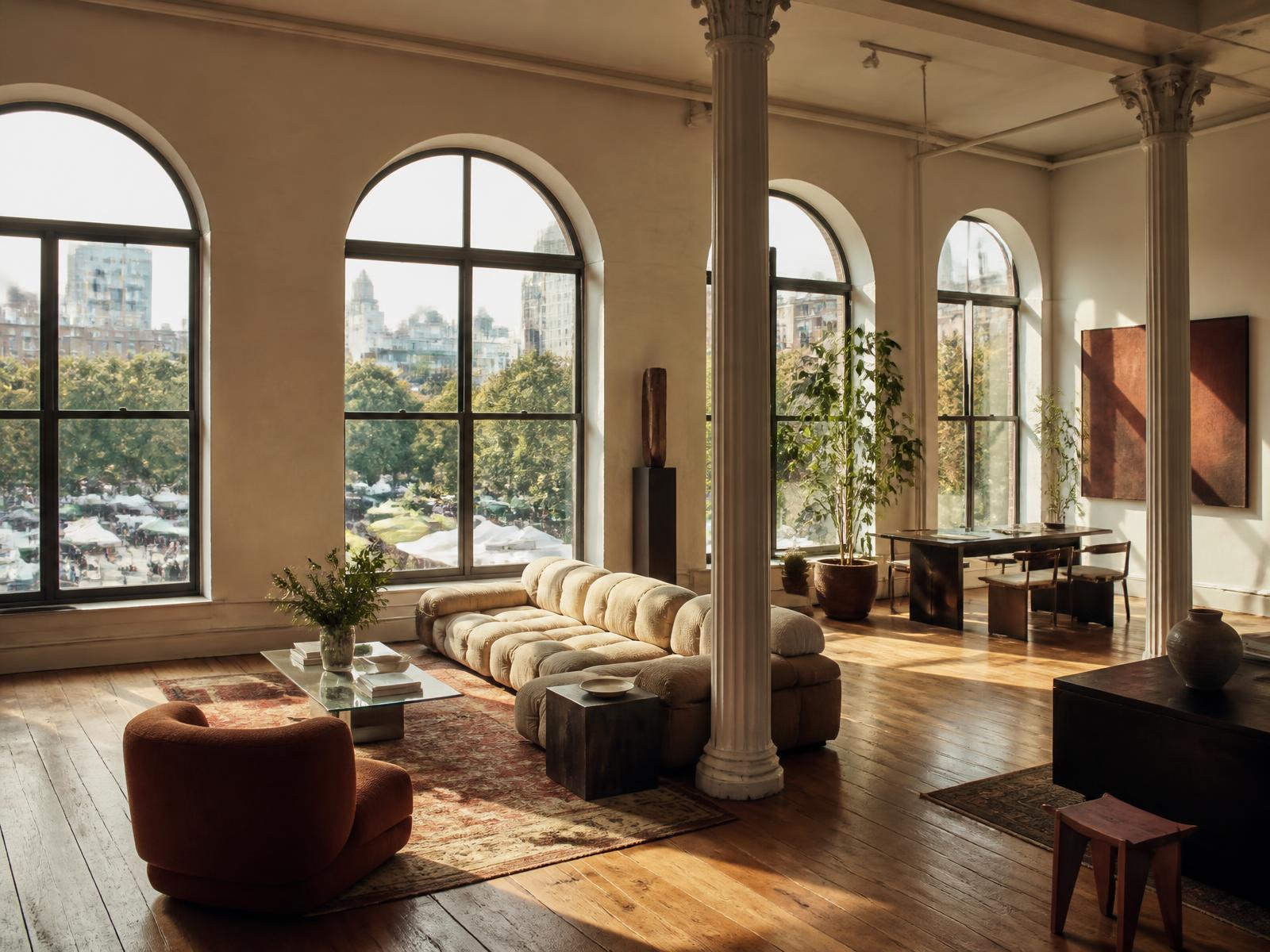
Two kinds of building, one address
Union Square is small enough to walk across in five minutes and contains two completely different kinds of loft floor. Almost every mistake in a search here comes from not knowing which one you are standing in.
The first were built to sell things. Between roughly 1860 and 1900 the blocks around the park became the most fashionable retail district in the country, and the stores built accordingly — cast iron and masonry, enormous windows, wide column spacing, high ceilings, floor plates designed so a shopper could see the whole department at once.
The second were built to supply them. From the 1890s into the 1920s, loft buildings with cast-iron and terra-cotta fronts replaced the rowhouses on the side streets, put up for the garment and printing trades that fed the stores. Narrower, plainer, and built around freight and machinery rather than display.
Both are marketed as Union Square lofts. Only one of them was built to hold weight.
Store floors, loft floors, and what got renovated
Store-and-loft buildings (roughly 1860–1900). The Ladies' Mile stock along Broadway and Sixth. Cast iron or masonry, very large windows, wide bays, ceilings that can run 14 feet and up. Beautiful floors and genuinely rare in Manhattan at this size. The catch is that retail display did not require heavy floor loads, and the freight — where it exists — was built for stock, not for equipment.
Garment and printing lofts (roughly 1890–1925). The side-street stock between Fifth and Irving. Terra-cotta and brick fronts, steel or early steel-and-timber framing, floor plates commonly 4,000 to 10,000 sq ft, a real freight shaft, and loads set for presses and cutting tables. This is where most of the demised small space is, and where anything physical belongs.
The renovated tier. Buildings taken back to the studs during the tech waves of the last twenty-five years — new systems, new lobbies, restored fronts. They read as loft and price at the top of the neighborhood. Excellent space; just be clear you are buying a renovation rather than discovering one.
What to check on a Union Square tour
Floor load. The question that separates the two building types, and the one tenants most often skip. Ask for the live-load rating in pounds per square foot. The old printing lofts frequently carry very well. The converted store floors often do not, because nobody needed them to. Get the number in writing before you plan for anything heavy.
Freight, and who runs it. Capacity in pounds, whether the car opens into your space or a shared corridor, and whether the operator works evenings and weekends. In a neighborhood this dense, a weekday-only freight is a real constraint on a studio.
Loss factor. Manhattan-specific and it moves your real number more than the asking rent does. Two floors quoted at the same price can differ by fifteen percent in usable space. Ask what it is on the floor you are touring, not the building average.
Loading, and the street. This is harder here than almost anywhere else we cover. The blocks around the park carry constant foot traffic, the greenmarket occupies the north and west sides four days a week, and curb space is scarce. Ask where a truck actually stops, and go and look at that spot on a market day.
Landmarks. A large part of the neighborhood sits inside the Ladies' Mile Historic District. Interior work is unaffected; anything touching windows, storefronts, signage or rooftop equipment goes through review. It is a schedule item on a build-out, not a blocker.
HVAC and after-hours. Ask whether cooling is base-building or your own units, and how after-hours air is billed. Studios and production teams run outside nine-to-five constantly, and metered after-hours HVAC is the line item that surprises people in month three.
Where the floors actually are
The neighborhood runs from Fourteenth Street up to about Eighteenth, and from Fifth Avenue across to Irving Place. For a tenant it splits three ways.
Facing the park. Union Square West, East and North. The recognizable addresses — the Decker Building, Tammany Hall, One Union Square East — the best light, the highest rents, and the shortest walk to the station of anywhere in the network.
The side streets between Fifth and Broadway. Sixteenth, Seventeenth and Eighteenth. The garment and printing loft stock, the most demised small space, and the best value in the neighborhood for a team that does not need a park view.
East toward Irving Place and Park Avenue South. Prewar office and converted loft, quieter, more corporate as you move north, and the point at which the neighborhood starts becoming Gramercy — which is worth knowing, because the rents change before the map does.
What tenants ask us about most
“How much is a floor?” Roughly $58–$95 per SF per year for creative loft space — side-street upper floors at the low end, renovated space facing the park or on Park Avenue South well above it. Ask what the loss factor is on the specific floor, whether cooling is base-building or yours, and how after-hours HVAC is metered before you compare two buildings.
“Store building or loft building?” The question that decides your search. The old cast-iron store buildings give you enormous plates, huge windows and wide column spacing, because they were built for retail display. The side-street loft buildings behind them were built for the garment and printing trades, so they are narrower but carry weight and have real freight. If you are putting equipment on the floor, you want the second kind.
“Can I do studio work or light production?” Photo, post and studio work, generally yes — the loft stock was built for it and much of it still has the freight and the floor loads. Anything louder or messier runs into three constraints: historic district rules outside, residential and retail neighbors, and street loading around the park that is genuinely difficult. Get hours, loading and permitted use into the lease.
“What's the catch with Union Square space?” You are paying for the transit, and you are bidding against funded tech companies for the same floors. That keeps the good space tight and the rents firm. The square is also busy in a way that shapes the working day — the greenmarket, the protests, the commuter crush. If none of that appeals, Gramercy is two blocks away and meaningfully cheaper.
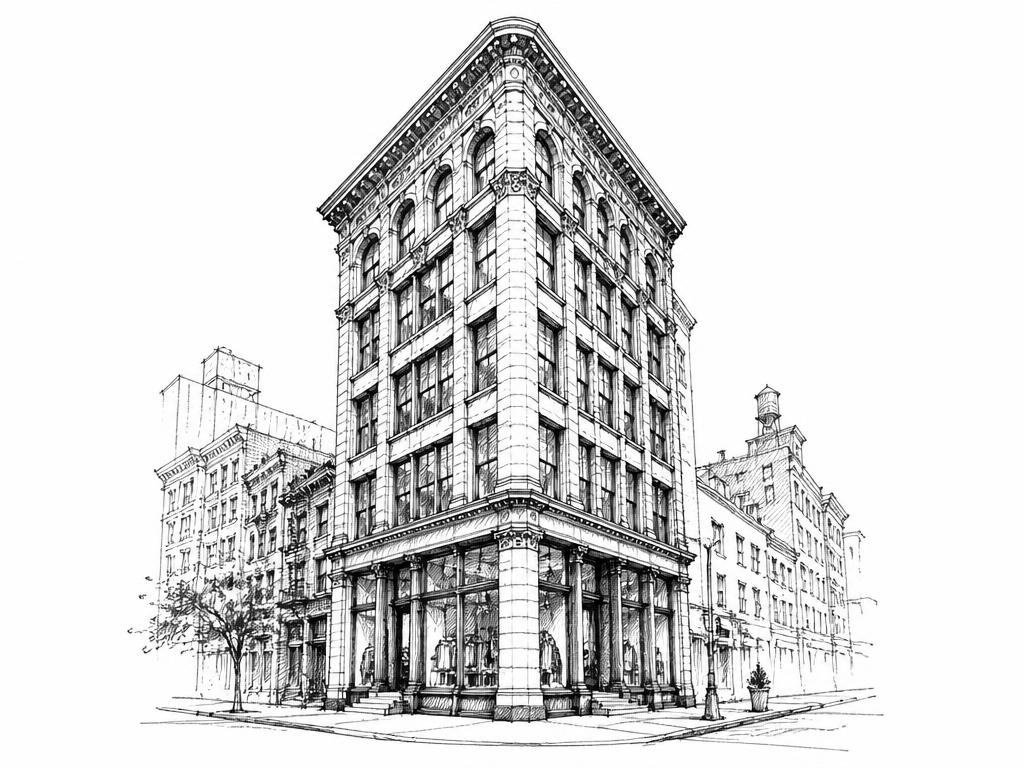
The same Ladies' Mile store-and-loft stock carried north — showroom floors with tall windows and wide bays, mixed with prewar office buildings around the Broadway and Fifth Avenue fork.
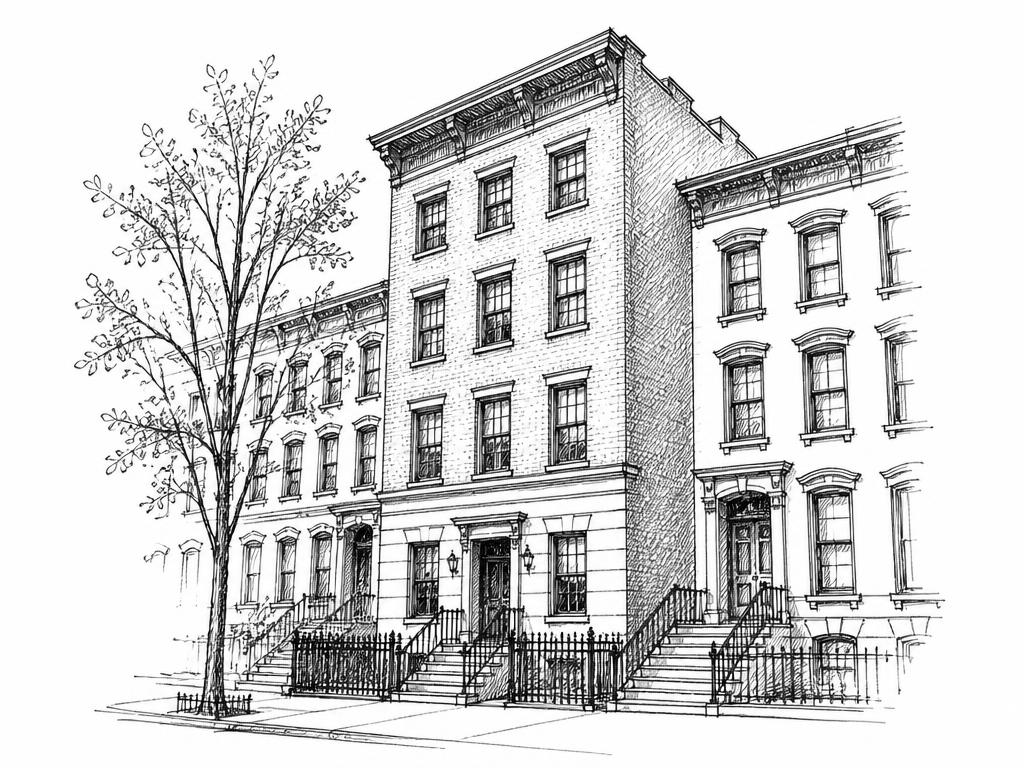
Quieter blocks east of Park Avenue South — brownstones and small prewar office buildings rather than showroom floors. Two blocks from the park and noticeably calmer.
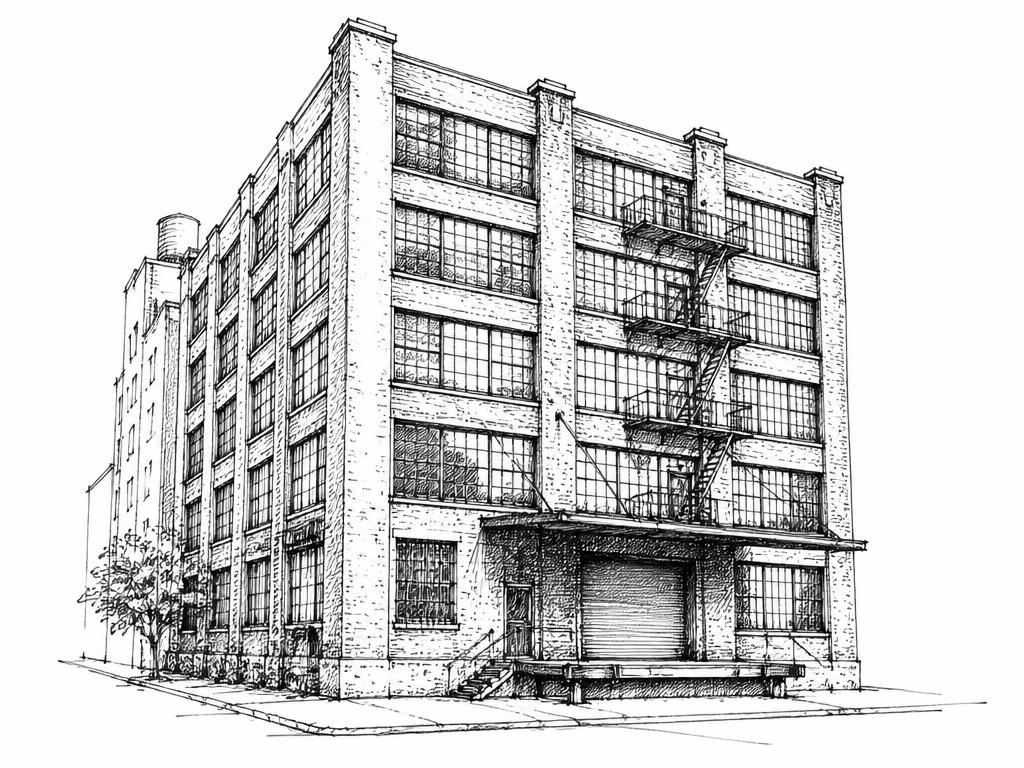
West of Sixth the buildings were built to store and move goods rather than display them — brick and steel warehouse lofts with real freight and heavier floor loads.
Tell us what you're after.
Seven quick questions. A person reads it. We keep an eye out — including for floors that never hit a listing site.
Start the Brief →